


Custom Steel Cable Lifting Assemblies (EN 13414)

Working Load Limits for slings of classes 6x19 and 6x36 with ferrule-secured eye terminations
Tensile Strength: 1770 N/mm²
| STEEL WIRE ROPE SLING (EN 13414-1) | |||||||
|---|---|---|---|---|---|---|---|
| Angle to the vertical |
CORE | 1-leg sling | 2-leg sling | 3 & 4 leg sling | Endless sling | ||
| 0° | 0° to 45° | 45° to 60° | 0° to 45° | 45° to 60° | 0° | ||
| Direct | Direct | Direct | Direct | Direct | Choke Hitch | ||
| Rope Dia. (mm) | Working Load Limits (t) | ||||||
| 8 | steel core | 0.75 | 1.05 | 0.75 | 1.55 | 1.1 | 1.2 |
| fibre core | 0.7 | 0.95 | 0.7 | 1.5 | 1.05 | 1.1 | |
| 9 | steel core | 0.95 | 1.3 | 0.95 | 2 | 1.4 | 1.5 |
| fibre core | 0.85 | 1.2 | 0.85 | 1.8 | 1.3 | 1.4 | |
| 10 | steel core | 1.15 | 1.6 | 1.15 | 2.4 | 1.7 | 1.85 |
| fibre core | 1.05 | 1.5 | 1.05 | 2.25 | 1.6 | 1.7 | |
| 11 | steel core | 1.4 | 2 | 1.4 | 3 | 2.12 | 2.25 |
| fibre core | 1.3 | 1.8 | 1.3 | 2.7 | 1.95 | 2.12 | |
| 12 | steel core | 1.7 | 2.3 | 1.7 | 3.55 | 2.5 | 2.7 |
| fibre core | 1.55 | 2.12 | 1.55 | 3.3 | 2.3 | 2.5 | |
| 13 | steel core | 2 | 2.8 | 2 | 4.15 | 3 | 3.15 |
| fibre core | 1.8 | 2.5 | 1.8 | 3.85 | 2.7 | 2.9 | |
| 14 | steel core | 2.25 | 3.15 | 2.25 | 4.8 | 3.4 | 3.7 |
| fibre core | 2.12 | 3 | 2.12 | 4.35 | 3.15 | 3.3 | |
| 16 | steel core | 3 | 4.2 | 3 | 6.3 | 4.5 | 4.8 |
| fibre core | 2.7 | 3.85 | 2.7 | 5.65 | 4.2 | 4.35 | |
| 18 | steel core | 3.7 | 5.2 | 3.7 | 7.8 | 5.65 | 6 |
| fibre core | 3.4 | 4.8 | 3.4 | 7.2 | 5.2 | 5.65 | |
| 20 | steel core | 4.6 | 6.5 | 4.6 | 9.8 | 6.9 | 7.35 |
| fibre core | 4.35 | 6 | 4.35 | 9 | 6.5 | 6.9 | |
| 22 | steel core | 5.65 | 7.8 | 5.65 | 11.8 | 8.4 | 9 |
| fibre core | 5.2 | 7.2 | 5.2 | 11 | 7.8 | 8.4 | |
| 24 | steel core | 6.7 | 9.4 | 6.7 | 14 | 10 | 10.6 |
| fibre core | 6.3 | 8.8 | 6.3 | 13.5 | 9.4 | 10 | |
| 26 | steel core | 7.8 | 11 | 7.8 | 16.5 | 11.5 | 12.5 |
| fibre core | 7.2 | 10 | 7.2 | 15 | 11 | 11.8 | |
| 28 | steel core | 9 | 12.5 | 9 | 19 | 13.5 | 14.5 |
| fibre core | 8.4 | 11.8 | 8.4 | 18 | 12.5 | 13.5 | |
| 32 | steel core | 11.8 | 16.5 | 11.8 | 25 | 17.5 | 19 |
| fibre core | 11 | 15 | 11 | 23.5 | 16.5 | 18 | |
| 36 | steel core | 15 | 21 | 15 | 31.5 | 22.5 | 23.5 |
| fibre core | 14 | 19 | 14 | 29 | 21 | 22.5 | |
| 40 | steel core | 18.5 | 26 | 18.5 | 39 | 28 | 30 |
| fibre core | 17 | 23.5 | 17 | 36 | 26 | 28 | |
| 44 | steel core | 22.5 | 31.5 | 22.5 | 47 | 33.5 | 36 |
| fibre core | 21 | 29 | 21 | 44 | 31.5 | 33.5 | |
| 48 | steel core | 26 | 37 | 26 | 55 | 40 | 42 |
| fibre core | 25 | 35 | 25 | 52 | 37 | 40 | |
| 52 | steel core | 31.5 | 44 | 31.5 | 66 | 47 | 50 |
| fibre core | 29 | 40 | 29 | 62 | 44 | 47 | |
| 56 | steel core | 36 | 50 | 36 | 76 | 54 | 58 |
| fibre core | 33.5 | 47 | 33.5 | 71 | 50 | 54 | |
| 60 | steel core | 42 | 58 | 42 | 88 | 63 | 67 |
| fibre core | 39 | 54 | 39 | 81 | 58 | 63 | |
| Leg Factor | 1 | 1.4 | 1 | 2.1 | 1.5 | 1.6 | |
The stated load factors are maximum values of the various steel wire rope sling types, stated according to the standard (Uniform Load) method of rating.
The stated WLL's are only valid for the steel wire rope with construction 6x36 IWRC, tensile strength 1770 N/mm².
Always make sure that the sling is fitted with adequate attachment devices like e.g. masterlinks, hooks, shackles.
Safety factor 5:1 EN 13414-1
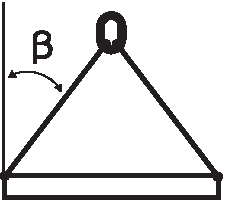
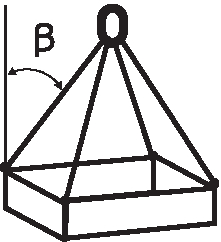
Visual guide to sling configurations with corresponding load factors
Tensile Strength: 1960 N/mm²
| Angle of inclination |
1-leg sling | 2-leg sling | 3 & 4-leg sling | endless sling | ||||||
|---|---|---|---|---|---|---|---|---|---|---|
| 1-leg | Laced | U-lift | 0°- 45° | 45° - 60° | 0°- 45° | 45° - 60° | 1-leg | Laced | U-lift | |
 |
 |
 |
 |
 |
 |
 |
 |
|||
| Load Factors | 1 | 0.8 | 2 | 1.4 | 1 | 2.1 | 1.5 | 2 | 1.6 | 4 |
| mm | Working Load Limits (t) | |||||||||
| 8 | 0.8 | 0.65 | 1.6 | 1.15 | 0.8 | 1.7 | 1.2 | 1.6 | 1.3 | 3.2 |
| 9 | 1.05 | 0.8 | 2.1 | 1.45 | 1.05 | 2.2 | 1.8 | 2.1 | 1.7 | 4.2 |
| 10 | 1.3 | 1 | 2.6 | 1.8 | 1.3 | 2.7 | 1.9 | 2.6 | 2 | 5.2 |
| 11 | 1.5 | 1.2 | 3 | 2.2 | 1.5 | 3.3 | 2.3 | 3 | 2.5 | 6 |
| 12 | 1.8 | 1.4 | 3.6 | 2.6 | 1.8 | 3.9 | 2.8 | 3.6 | 3 | 7.2 |
| 13 | 2.2 | 1.8 | 4.4 | 3 | 2.2 | 4.5 | 3.2 | 4.4 | 3.5 | 8.8 |
| 14 | 2.5 | 2 | 5 | 3.5 | 2.5 | 5.3 | 3.8 | 5 | 4 | 10 |
| 16 | 3.3 | 2.6 | 6.6 | 4.6 | 3.3 | 6.9 | 4.9 | 6.6 | 5.2 | 13.2 |
| 18 | 4.1 | 3.3 | 8.2 | 5.8 | 4.1 | 8.7 | 6.2 | 8.2 | 6.6 | 16.4 |
| 20 | 5.1 | 4.1 | 10.2 | 7.2 | 5.1 | 10.7 | 7.7 | 10.2 | 8.2 | 20.4 |
| 22 | 6.2 | 4.9 | 12.4 | 8.7 | 6.2 | 13 | 9.3 | 12.4 | 10 | 24.8 |
| 24 | 7.4 | 5.9 | 14.8 | 10.3 | 7.4 | 15.5 | 11.1 | 14.8 | 11.8 | 29.6 |
| 26 | 8.7 | 7 | 17.4 | 12.1 | 8.7 | 18.2 | 13 | 17.4 | 13.8 | 34.8 |
| 28 | 10 | 8 | 20 | 14 | 10 | 21 | 15 | 20 | 16 | 40 |
| 32 | 13 | 10.4 | 26 | 18.4 | 13 | 27.5 | 19.7 | 26 | 21 | 52 |
| 36 | 16.6 | 13.3 | 33 | 23 | 16.6 | 35 | 25 | 33 | 26.5 | 66 |
| 40 | 20.5 | 16.4 | 41 | 29 | 20.5 | 43 | 31 | 41 | 33 | 82 |
| 44 | 25 | 20 | 50 | 35 | 25 | 52 | 37 | 50 | 40 | 100 |
| 48 | 29.5 | 23.6 | 59 | 41 | 29.5 | 62 | 44 | 59 | 47 | 118 |
| 52 | 35 | 28 | 70 | 48 | 35 | 73 | 52 | 70 | 55 | 140 |
| 56 | 40 | 32 | 80 | 56 | 40 | 84 | 60 | 80 | 64 | 160 |
| 60 | 46 | 37 | 92 | 65 | 46 | 97 | 69 | 92 | 74 | 184 |
Load factors represent the multiplier applied to single-leg capacity based on sling configuration and angle.
The stated WLL's are valid for steel wire rope construction 6x36 IWRC, tensile strength 1960 N/mm².
Laced configuration reduces capacity by 20% (factor 0.8) due to bending stress at the splice point.
U-lift configuration doubles capacity (factor 2) as both legs share the load vertically.
Multi-leg slings: Load factors assume uniform load distribution across all legs. Actual capacity depends on angle of inclination.
Safety factor 5:1 EN 13414-1
Safe Usage, Selection & Inspection Guide
A wire rope sling is a type of lifting sling made of wire rope that is used to hoist heavy loads in a variety of industries, including construction, shipping, and manufacturing. It is made up of several individual strands of wire that are twisted together to form a strong, flexible rope. The wire rope sling is designed to distribute the weight of the load evenly, making it easier to lift and move.
Wire rope slings come in different types, including single-leg slings, double-leg slings, and multi-leg slings, depending on the number of legs or branches that are attached to the load. They are also available in different configurations, such as choker, basket, or vertical hitch, which affect their lifting capacity and application.
Wire rope slings are highly durable and resistant to abrasion, making them suitable for heavy lifting applications that require a high level of strength and durability. However, they should be inspected regularly for signs of wear and tear, and should only be used by trained professionals who understand their safe usage and handling procedures.
Wire rope slings are available in a range of sizes and assemblies. Select the slings to be used and plan the lift taking the following into account:
Type of sling to be used - endless, single, two, three or four leg.
Capacity - the sling must be both long enough and strong enough for the load and the slinging method.
Apply the mode factor for the slinging method.
For use at temperatures exceeding 100°C or below minus 40°C refer to the supplier's instructions.
Where slings may come into contact with acids or chemicals consult the supplier.
In the case of multi-leg slings the angle between the legs should not be less than 30° or exceed the maximum marked.
Multi-leg slings exert a gripping force on the load which must be taken into account; this increases as the angle between the legs increases.
Due to the possibility of sparking, the use of aluminium is restricted in certain classified atmospheres, so ensure the ferrule is suitable for such conditions.
Always consult the supplier before using wire rope slings at extreme temperatures (above 100°C or below -40°C) or in environments where they may contact acids or chemicals.
Never return damaged or contaminated slings to storage. They should be dry, clean and protected from corrosion.
Store wire rope slings on a rack and not lying on the ground. The storage area should be dry and free of any contaminants which may harm the sling.
Do not alter, modify or repair a wire rope sling but refer such matters to a Competent Person.
Do not attempt lifting operations unless you understand the use of the equipment, the slinging procedures and the mode factors to be applied.
Do not use defective slings or accessories.
Do not force, hammer or wedge slings or fittings into position. They must fit freely. Check to ensure correct engagement of fittings and appliances.
Position hooks of multi-leg slings facing outward from the load.
Do not lift on the point of a hook.
Ensure that the wire rope is not twisted or knotted.
Ensure the effective diameter of pins, hooks etc upon which soft eyes fit is at least 2 × the wire rope diameter.
Position the splices of endless slings in the standing part of the sling away from hooks and fittings.
Never join wire rope slings made from different lays of rope together as this will cause them to un-lay thus seriously affecting their capacity.
Back hook free legs to the masterlink to avoid lashing legs which might accidentally become engaged or otherwise become a hazard.
Take the load steadily and avoid shock loads.
Do not leave suspended loads unattended. In an emergency cordon off the area.
Maintenance requirements are minimal. Keep wire rope slings clean and protect from corrosion. Use non-acidic lubricants.
Regularly inspect wire rope slings and, in the event of the following defects, refer the sling to a Competent Person for thorough examination:
Wire rope slings should only be used by trained professionals who understand safe usage and handling procedures. Always consult a Competent Person if you have any doubts about the condition or suitability of a sling for a particular application.


